
Is Your Pool Losing More Water Than It Should?
Every pool loses some water to evaporation — especially during the long, dry summers that Sherman Oaks and the San Fernando Valley are known for. But if you're refilling your pool more than an inch or two per week, something else may be going on. An undetected pool leak can waste tens of thousands of gallons annually, spike your water bill, and quietly erode the soil and structure supporting your pool shell and deck.
At Pipe Leak Detection Pros, we help homeowners across Sherman Oaks and surrounding neighborhoods like Van Nuys, Encino, and Studio City pinpoint exactly where water loss is occurring — before it becomes a costly structural problem.
Common Warning Signs of a Pool Leak
Many pool leaks go unnoticed for months because the early signs are subtle. Here are the most common indicators that your pool may have an active leak rather than normal evaporation:
- Water loss greater than ¼ inch per day — Evaporation rarely exceeds this rate in Southern California. Anything more warrants investigation.
- Cracks in the pool deck or surrounding concrete — Soil saturation from a leaking pool can cause ground movement that shows up as surface cracks near the pool's edge.
- Wet or soggy areas in the yard — Unexplained moisture near the equipment pad or along the pool's perimeter often signals a leaking underground line.
- Constantly running auto-fill valve — If your pool's automatic fill system runs more than usual, that's the pool telling you it's losing water faster than it should.
- Rising water bills — A slow leak in a buried plumbing line can add hundreds of dollars to your monthly water bill without any visible evidence at the surface.
- Algae growth despite proper chemical maintenance — Dilution from constant water replacement can throw off your pool's chemical balance, encouraging algae blooms.
The Bucket Test: A Simple First Step
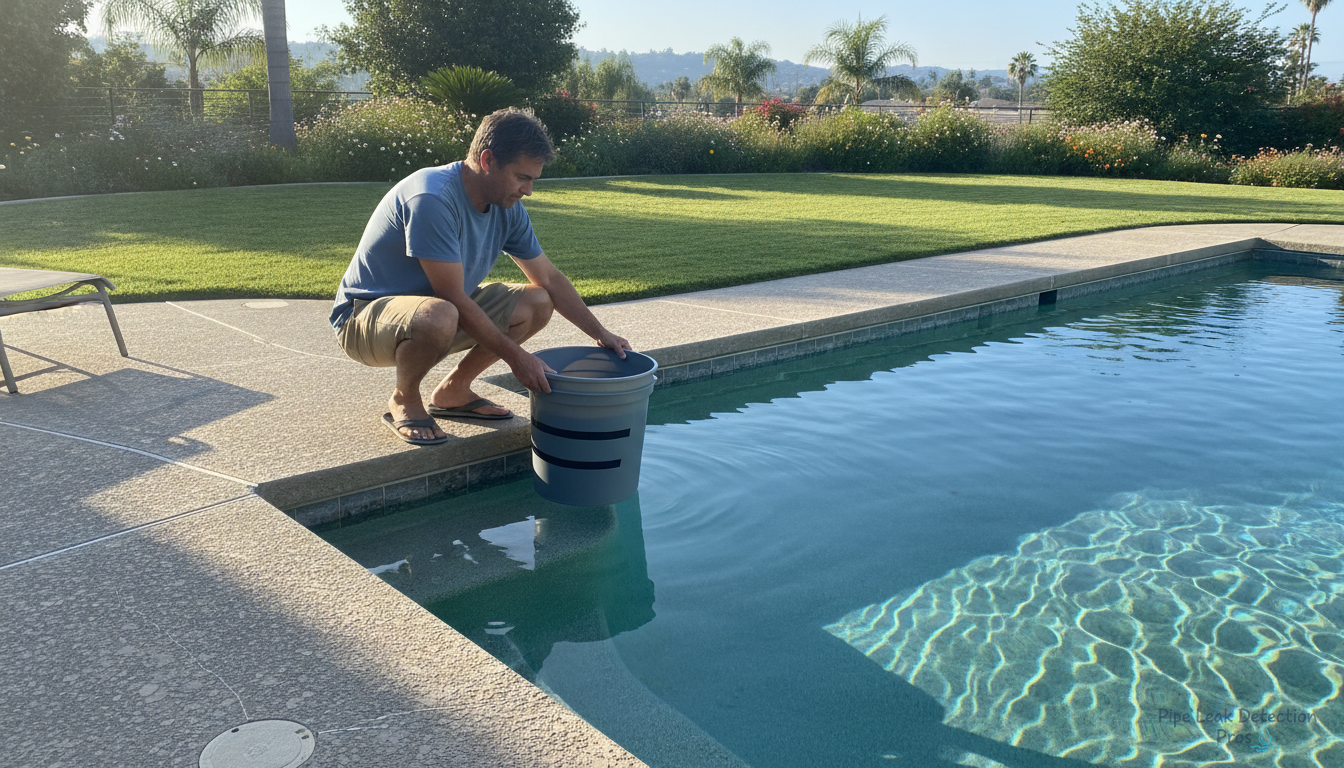
Before calling a professional, you can perform a quick bucket test to confirm whether your pool is leaking or simply evaporating. Here's how:
- Fill a 5-gallon bucket with pool water and set it on a pool step so the outside is submerged.
- Mark the waterline inside the bucket and on the pool wall with tape or a marker.
- Leave the pump running as normal and wait 24 hours.
- Compare the water drop inside the bucket versus the drop in the pool itself.
If the pool has lost significantly more water than the bucket, you almost certainly have a leak. It's time to call a professional leak detection service to find out where the water is going.
Where Pool Leaks Most Commonly Occur
Pool leaks don't always originate where you'd expect. The most frequent sources our technicians find include:
- Skimmer bodies and throat gaskets — Cracks in the plastic skimmer or a deteriorated gasket behind the faceplate are among the most common causes of pool water loss. Learn more about our skimmer leak detection and repair service.
- Underground plumbing lines — Buried return lines, suction lines, and main drain pipes can crack or separate over time, especially in soil that shifts seasonally or seismically. Our pool plumbing leak detection service uses pressure decay testing and acoustic ground-listening equipment to locate these leaks precisely.
- Shell cracks in gunite, plaster, or fiberglass — Hairline cracks can allow slow but steady water loss. Not all visible cracks are active leaks — dye testing distinguishes cosmetic crazing from structural fractures that need repair. See our pool shell crack detection service for details.
- Equipment pad connections — Union fittings, pump lid o-rings, and multiport valve gaskets at the equipment pad are under pressure every time the pump runs, and small seal failures can waste significant water daily.
Why Non-Invasive Detection Matters
The traditional approach to pool leak hunting — digging until you find the wet spot — is costly, disruptive, and often unnecessary. Modern acoustic listening equipment, electronic pipe tracing, pressure decay testing, and dye injection allow trained technicians to locate the exact source of a leak before a single shovel breaks ground.
Our pool leak detection service covers the full diagnostic process: visual inspection, bucket test baseline, pressure testing of all plumbing circuits, and dye testing of suspect areas. The result is a written report identifying the precise location of every active leak — so any repair work is targeted and efficient.
Don't Wait for a Small Leak to Become a Big Problem
In Sherman Oaks and throughout the San Fernando Valley, many pools sit over clay-rich soils that expand when saturated and contract when dry. Sustained water loss from a pool leak accelerates this cycle, leading to deck heaving, shell movement, and in some cases, significant structural repair costs that dwarf the original detection fee.
If you've noticed any of the warning signs above — or you just have a nagging feeling your pool is losing more water than it should — the best next step is a professional diagnostic. Pipe Leak Detection Pros serves Sherman Oaks and nearby communities including Tarzana, Reseda, and North Hollywood, with same-week appointments available Monday through Sunday, 8:00 AM to 6:00 PM.
Call us at (213) 455-5332 or email [email protected] to schedule your pool leak assessment today.
Confirm Availability
Call +12134555332 or fill out our online form for a free, no-obligation quote.
Request Free Quote